

EV charging, fast broadband and the features that now matter in a rental
The checklist for choosing a rental home has changed. A decade ago, the questions were about gas or electric heating, whether there was a washing machine, and how far the nearest tube stop was. In 2026, the features that make a material difference to daily life look quite different.
Here's a guide to what to ask about. And what to prioritise. When you're viewing a rental in 2026.
EV charging
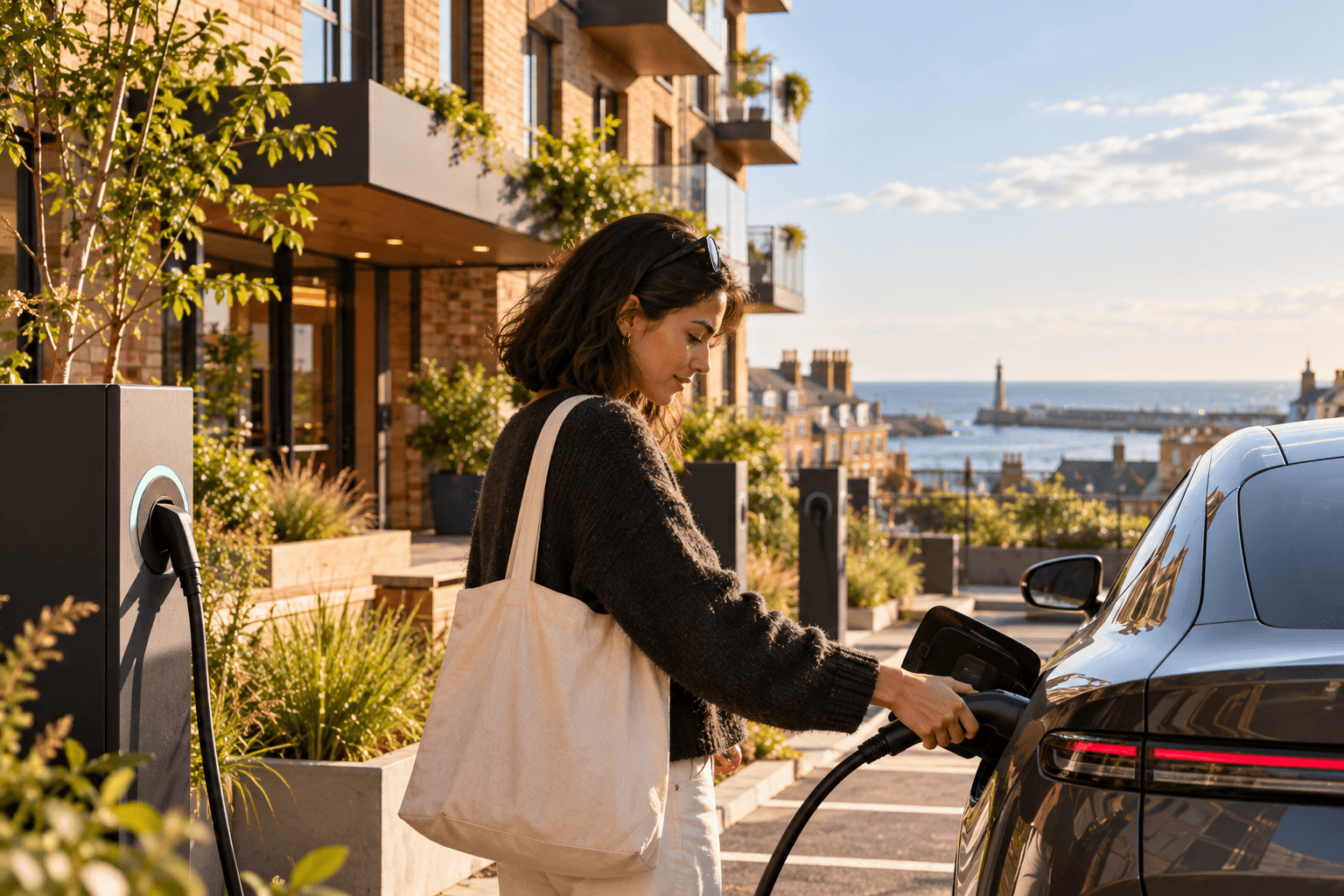
Electric vehicle ownership has grown significantly in the UK, and renters are increasingly caught between wanting to switch to an EV and not being able to charge at home. Most private rental properties have no provision for EV charging. No outdoor socket, no dedicated charger, and in many cases no easy way to retrofit one without a landlord's permission and involvement.
For anyone who owns or is planning to own an electric car, this matters. Workplace charging and public chargers are adequate for occasional use, but daily charging from home is what makes EV ownership genuinely convenient rather than a constant logistical puzzle.
When viewing a rental, ask specifically: is there a dedicated EV charger or outdoor socket? Is it rated for overnight charging? Are there plans to install one? Many landlords won't have thought about this and don't have a clear answer.
Helgi developments include EV charging points across all our neighbourhoods. It was designed in from the start, rather than retrofitted or promised as a future addition.
Ultrafast broadband
Remote working has changed broadband from a nice-to-have into a utility on a par with heating and water. A property with unreliable or slow broadband is not a functional home for a significant proportion of renters in 2026.
When viewing, ask: what broadband speed is currently available at this address? Is there a contract in place and who is responsible for it? What is the router situation?
A simple check on Ofcom's broadband checker will show you what speeds are available at any specific address in the UK. Don't rely on estate agent descriptions . 'superfast broadband available in the area' is not the same as 'this property has a gigabit connection'.
Some Helgi homes come with complimentary ultrafast broadband included. You move in, it works.
Energy efficiency
Energy costs have stabilised relative to the peaks of 2022–23 but remain significantly higher than pre-crisis levels. An energy-efficient home. Properly insulated, with modern heating systems. Costs materially less to run than older stock.
EPC ratings are publicly available for any rental property and should be one of the first things you check. An EPC rating of C or above is broadly acceptable; an EPC of E or below will cost you more to heat and may indicate a property with poor insulation or an old heating system.
New build rental homes are built to current energy efficiency standards and consistently outperform older stock. This is one of the less-discussed advantages of renting a new build. Lower bills, year after year.
The residents app
This sounds minor but genuinely affects the day-to-day quality of renting. A well-run residents app means you can report a maintenance issue at 10pm on a Sunday and have confirmation that it's been logged and scheduled by Monday morning. It means community information flows clearly rather than through paper notices.
Ask any prospective landlord or management company: how do I report a maintenance issue? What's the typical response time? Is there an app or an online portal?
Helgi homes include EV charging and a resident app as standard, with some properties offering ultrafast broadband includede too. Not as premium add-ons or future promises. These are the features that change what renting actually feels like on an ordinary Tuesday.
See what's included → wearehelgi.com/faqs